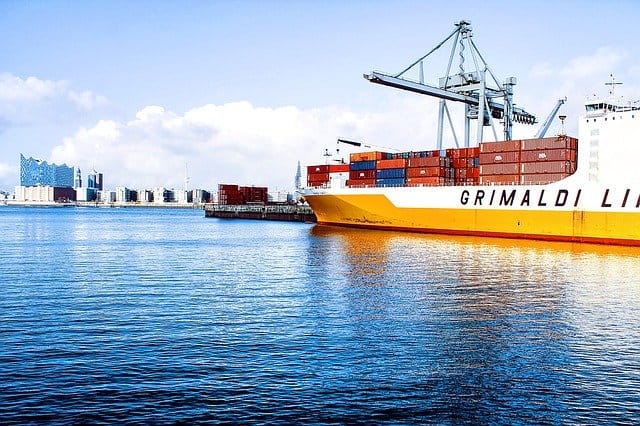
Sea freight is a payment for the transportation of cargo by sea. It includes the cost of transportation, as well as additional costs associated with loading, unloading, and handling of cargo. Sea freight is one of the key elements of international trade, as most goods between countries are transported by sea. In this article, we will look at what sea freight is, how it is formed, what factors affect its cost, and what types of such payment exist.
Definition and essence of sea freight
Sea freight is the contractual cost for the transportation of cargo from the port of departure to the port of destination, which the exporter or importer pays to the shipowner or shipping company. In this case, sea freight may include not only the actual transportation, but also additional services such as insurance, storage, and handling of cargo in the port. The parties involved in maritime transportation enter into a freight contract, which stipulates the terms of transportation, responsibility for the safety of the cargo and delivery time. This agreement may be executed in the form of a bill of lading, a document confirming the ownership of the cargo and the terms of its transportation.
Types of sea freight
Depending on the type of cargo, the method of transportation and the terms of the contract, there are several types of sea freight:
- Linear. It is used during regular voyages of vessels following established routes. Liner freight is usually used for container transportation, and its price includes all standard operations, such as loading and unloading. Such voyages are convenient for companies that make regular deliveries.
- Trumpet. This type of freight is typical for ships operating on irregular routes and transporting large consignments of bulk cargo, such as coal, ore, or grain. In this case, the route and schedule of the voyage are determined individually, and the cost depends on the distance, volume, and specifics of the goods.
- Charter. This type of charter involves the lease of all or part of a vessel for a certain period of time or for a specific voyage. Charter transportation is often used for the transportation of bulky goods or when special conditions are required. There are several types of charter agreements: time charter – lease of a vessel for a period of time and bareboat charter – lease without crew.
Factors affecting the cost of sea freight
Depending on a large number of factors, the amount of freight may vary:
- The route of transportation. The length of the route and the availability of transit ports significantly affect the cost. The longer the route, the higher the freight rate.
- Type and volume of cargo. Transportation of dangerous, bulky or special cargo will cost more than transportation of standard containers. A large volume can also affect the tariff, as shipowners often provide discounts for the transportation of large consignments.
- Seasonal fluctuations. Demand for maritime transportation may increase during certain seasons, such as before holidays or during the season of active production. This can lead to an increase in rates.
- Additional services. The freight rate may include various additional services: packaging, insurance, warehousing, support, and customs clearance.
- Current market situation. The global economy, changes in fuel prices, political situation and other global factors also affect freight rates. For example, in the face of increased demand for container transportation, rates can rise sharply.
Principles of sea freight calculation
Sea freight can be calculated in several ways depending on the terms of the contract and the characteristics of the cargo:
- By weight or volume of cargo. Depending on the specifics of the goods, the freight rate may depend on the weight – metric tons or volume – cubic meters. For example, for heavy cargoes, the rate is calculated by weight, and for light but bulky cargoes, the rate is calculated by volume.
- FOB and CIF terms. Under FOB (Free On Board) terms, the buyer pays the freight separately from the cost of the goods, and under CIF (Cost, Insurance and Freight) terms, the freight is included in the delivery cost, and the seller assumes responsibility for the transportation and insurance of the cargo until it arrives at the port of destination.
- Rate per container. This method is convenient for calculating the cost of transportation of standard goods shipped in 20 or 40-foot containers.
- Charter rate. When renting a vessel for charter, the rate is calculated based on the duration of the lease, the route and the specifics of the cargo being transported. In this case, the calculation can be more flexible and take into account the individual characteristics of the cargo and the contract.
Additional fees and charges
In addition to the main freight, sea transportation may include additional fees and charges, such as:
- Terminal fees. Payments for cargo handling at ports of departure and destination.
- Fuel surcharges. The rate may include fuel surcharges (BAF) to compensate for rising fuel prices.
- Container overload fee. In some cases, cargoes are transshipped to other vessels on the way, which requires additional payment.
- Insurance fee. A fee for cargo insurance against damage and loss.
Advantages and disadvantages of sea freight
Sea freight has a number of advantages and disadvantages compared to other modes of transportation:
- Advantages: low cost of transportation of large volumes of cargo, the ability to transport any type of goods, including dangerous and bulky goods. Maritime transport is less subject to weight and volume restrictions, which makes it indispensable for heavy and large cargo.
- Disadvantages: low speed and dependence on weather conditions, which can lead to delays. Also, sea transportation requires a developed infrastructure in ports, which can be a limitation for some regions.
Sea freight is the backbone of global trade, enabling the movement of goods over long distances at cost-effective rates. Understanding the principles of its calculation and the factors that affect the cost will allow you to effectively plan international deliveries, minimize risks and control costs.